Running a small business in today’s fast-paced digital world means staying ahead of customer expectations. The right CRM software for small business can transform how you manage leads, nurture relationships, and boost sales—without breaking the bank.
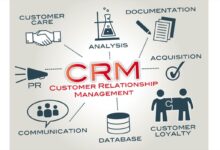
Why CRM Software for Small Business is a Game-Changer

Customer Relationship Management (CRM) software isn’t just for enterprise-level companies anymore. Small businesses now have access to powerful, affordable tools that streamline operations, improve customer engagement, and drive growth. With the right CRM, even a team of two can operate like a well-oiled machine.
Boosting Sales Efficiency
One of the most significant benefits of CRM software for small business is its ability to streamline the sales process. Instead of juggling spreadsheets, sticky notes, and endless email threads, a CRM centralizes all customer interactions in one place.
- Automated lead tracking ensures no prospect falls through the cracks.
- Sales pipelines provide visual clarity on where each deal stands.
- Task reminders keep your team on schedule for follow-ups and outreach.
According to a study by Nucleus Research, businesses see an average return of $8.71 for every dollar spent on CRM, thanks to increased productivity and faster deal closures.
“A CRM isn’t just a database—it’s a sales accelerator.” — Forbes
Enhancing Customer Relationships
Small businesses thrive on personal connections. CRM software helps maintain that personal touch at scale. Every customer interaction—calls, emails, support tickets, social media messages—can be logged and accessed instantly.
- Personalized communication becomes easier with detailed customer histories.
- Automated birthday or anniversary messages strengthen loyalty.
- Customer segmentation allows for targeted marketing campaigns.
Tools like Zoho CRM offer AI-powered insights that suggest the best time to contact a lead or recommend follow-up actions based on past behavior.
Top 7 CRM Software for Small Business in 2024
With dozens of options on the market, choosing the right CRM software for small business can feel overwhelming. To simplify your decision, we’ve analyzed the top seven platforms based on affordability, ease of use, scalability, and feature richness.
1. HubSpot CRM
HubSpot CRM stands out as one of the most user-friendly and powerful free CRM solutions available. It’s ideal for startups and small teams looking to scale without upfront costs.
- Free forever plan with unlimited users and contacts.
- Intuitive interface with drag-and-drop pipeline management.
- Seamless integration with email, calendar, and social media.
Its marketing, sales, and service hubs can be upgraded as your business grows. HubSpot also offers extensive educational resources through its HubSpot Academy, helping small business owners master CRM strategies.
2. Zoho CRM
Zoho CRM is a feature-rich platform designed specifically with small to mid-sized businesses in mind. It combines affordability with enterprise-level capabilities.
- AI-powered assistant (Zia) automates data entry and predicts sales outcomes.
- Customizable workflows and approval processes.
- Strong integration with other Zoho apps like Books, Campaigns, and Desk.
Pricing starts at just $14/user/month, making it one of the most cost-effective CRM software for small business solutions. It’s also highly scalable, allowing businesses to add modules as they grow.
3. Salesforce Essentials
When people think of CRM, Salesforce often comes to mind. While the full Salesforce platform can be complex, Salesforce Essentials is tailored for small businesses with up to 10 users.
- Mobile-first design for on-the-go access.
- Pre-built templates for common industries like real estate, consulting, and retail.
- Robust reporting and dashboard tools.
At $25/user/month, it’s pricier than some competitors but offers unmatched reliability and a vast ecosystem of third-party apps via the AppExchange. Learn more at Salesforce Pricing.
crm software for small business – Crm software for small business menjadi aspek penting yang dibahas di sini.
Key Features to Look for in CRM Software for Small Business
Not all CRMs are created equal. When evaluating options, focus on features that align with your business goals and operational needs. The best CRM software for small business balances functionality with simplicity.
Contact and Lead Management
This is the foundation of any CRM. You need a system that captures, organizes, and tracks every lead and customer interaction.
- Automatic contact syncing from email and social media.
- Duplicate detection to maintain clean data.
- Custom fields to store industry-specific information (e.g., project status, contract value).
For example, Insightly allows you to link contacts to projects and tasks, making it ideal for service-based businesses like agencies or consultants.
Sales Pipeline and Automation
A visual sales pipeline helps your team understand where each opportunity stands—prospecting, negotiation, or closing.
- Drag-and-drop stages for easy customization.
- Automated follow-up emails and task assignments.
- Forecasting tools to predict monthly or quarterly revenue.
Tools like Pipedrive excel in this area, offering a simple, intuitive pipeline that’s perfect for sales-focused small businesses.
Integration Capabilities
Your CRM shouldn’t exist in a silo. It needs to connect with the tools you already use—email, accounting, marketing automation, and customer support.
- Native integrations with Gmail, Outlook, Slack, and Zoom.
- API access for custom integrations.
- Pre-built connectors for platforms like QuickBooks, Mailchimp, and Shopify.
For e-commerce businesses, integrating your CRM with Shopify can automatically sync customer orders and purchase history, enabling personalized post-purchase follow-ups.
How to Choose the Right CRM Software for Small Business
Selecting the perfect CRM isn’t just about features—it’s about fit. A tool that works for a 5-person marketing agency might not suit a 10-person construction firm. Here’s a step-by-step guide to making the right choice.
Assess Your Business Needs
Start by identifying your pain points. Are you losing leads? Struggling with follow-ups? Facing communication gaps between sales and support?
- Map out your customer journey from lead to close.
- List the tools you currently use and where data silos exist.
- Determine whether you need industry-specific features (e.g., real estate lead tracking).
For instance, a real estate brokerage might prioritize lead scoring and property matching, while a consulting firm may need robust project management features.
Consider Scalability and Budget
While free CRMs like HubSpot are great for starters, they may lack advanced features as your team grows. Consider your 1-3 year growth plan.
- Will the CRM support more users without performance issues?
- Are there hidden costs for storage, integrations, or support?
- Does the pricing model scale linearly or jump significantly at higher tiers?
Many CRM software for small business platforms offer tiered pricing. For example, Zoho CRM’s Standard plan is $14/user/month, but the Professional plan jumps to $23/user/month—evaluate whether the added features justify the cost.
Test Before You Commit
Most CRM providers offer free trials or freemium versions. Take advantage of these to test usability, performance, and team adoption.
crm software for small business – Crm software for small business menjadi aspek penting yang dibahas di sini.
- Invite key team members to participate in the trial.
- Import real data (e.g., a sample of 50 leads) to test functionality.
- Simulate common workflows like lead assignment and follow-up sequences.
Pay attention to onboarding time. If it takes more than a week to get basic functionality up and running, it might not be the right fit for a small team with limited IT resources.
Implementing CRM Software for Small Business: Best Practices
Choosing the right CRM is only half the battle. Successful implementation is what turns a tool into a transformation.
Start with Clear Goals
Define what success looks like. Is it a 20% increase in lead conversion? A 30% reduction in response time? Clear goals help measure ROI and keep the team aligned.
- Set KPIs like lead response time, deal closure rate, and customer satisfaction.
- Assign ownership of CRM management (e.g., a CRM admin or team lead).
- Communicate the ‘why’ behind the CRM to gain team buy-in.
Without clear objectives, teams may see the CRM as just another data entry chore rather than a growth enabler.
Train Your Team Effectively
Even the best CRM software for small business will fail if your team doesn’t use it consistently. Invest in proper training.
- Host hands-on workshops instead of just sending manuals.
- Create short video tutorials for common tasks (e.g., logging a call, updating a deal stage).
- Designate a ‘CRM champion’ to answer questions and encourage adoption.
According to Salesforce, 43% of CRM failures are due to lack of user adoption. Make training ongoing, not a one-time event.
Migrate Data Carefully
Moving data from spreadsheets, email, or legacy systems requires planning. Poor data migration can lead to duplicates, inaccuracies, and frustration.
- Clean your existing data before importing (remove duplicates, standardize formats).
- Use CSV imports for simple data or APIs for complex systems.
- Test the import with a small batch before going live.
Many CRM platforms offer migration services or partner with third-party tools like Import2 to automate the process.
Common CRM Mistakes Small Businesses Make
Even with the best intentions, small businesses often fall into traps that undermine their CRM investment. Avoiding these pitfalls can save time, money, and frustration.
Overcomplicating the Setup
It’s tempting to customize every field, workflow, and automation from day one. But complexity kills adoption.
- Start with core features: contact management, pipeline tracking, and basic reporting.
- Gradually add automation and custom fields as needed.
- Resist the urge to replicate every process from your old system.
Focus on simplicity. A clean, easy-to-use CRM will be used more consistently than a cluttered one.
Ignoring Mobile Accessibility
Small business owners and sales reps are rarely at their desks. A CRM without a strong mobile app limits usability.
- Ensure the CRM has a dedicated iOS and Android app.
- Test mobile features like offline access, voice-to-text notes, and calendar sync.
- Check if mobile users can perform all critical tasks (e.g., updating deals, logging calls).
Salesforce and Zoho CRM offer robust mobile experiences, while some lesser-known platforms may lack full functionality on mobile.
crm software for small business – Crm software for small business menjadi aspek penting yang dibahas di sini.
Failing to Maintain Data Quality
Garbage in, garbage out. A CRM is only as good as the data it contains.
- Set rules for data entry (e.g., required fields, standardized naming).
- Schedule regular audits to remove outdated or duplicate records.
- Use automation to update fields (e.g., last contact date, lead source).
According to Gartner, poor data quality costs organizations an average of $12.9 million annually. For small businesses, even a fraction of that loss can be devastating.
Future Trends in CRM Software for Small Business
The CRM landscape is evolving rapidly, driven by AI, automation, and changing customer expectations. Staying ahead of these trends ensures your business remains competitive.
AI-Powered Insights and Automation
Artificial Intelligence is no longer a luxury—it’s becoming standard in modern CRM platforms.
- AI can predict which leads are most likely to convert.
- Chatbots handle initial customer inquiries and qualify leads 24/7.
- Natural language processing (NLP) extracts insights from emails and calls.
For example, HubSpot’s AI tools can generate email subject lines and body copy based on your past high-performing messages, saving hours of writing time.
Hyper-Personalization at Scale
Customers expect personalized experiences. CRM software for small business is now enabling micro-segmentation and tailored communication.
- Behavioral tracking (e.g., website visits, email opens) triggers automated responses.
- Dynamic content in emails changes based on user profile data.
- Recommendation engines suggest products or services based on past behavior.
This level of personalization was once only possible for large enterprises, but platforms like ActiveCampaign are bringing it within reach of small businesses.
Integration with Customer Experience (CX) Platforms
The future of CRM isn’t just managing relationships—it’s orchestrating entire customer experiences.
- CRMs are merging with help desks, live chat, and feedback tools.
- Unified customer profiles combine sales, service, and marketing data.
- Real-time sentiment analysis detects customer frustration and escalates issues.
Tools like Zendesk and Freshsales are leading this convergence, offering all-in-one platforms that eliminate the need for multiple disjointed systems.
Real-World Success Stories: CRM Software for Small Business in Action
Theory is great, but real results speak louder. Here are three small businesses that transformed their operations with the right CRM software for small business.
Case Study 1: Local Marketing Agency Boosts Client Retention
A 7-person digital marketing agency in Austin struggled with inconsistent client communication and missed renewal dates. After implementing Zoho CRM, they automated client check-ins, set up renewal reminders, and tracked project milestones.
- Client retention increased by 35% in six months.
- Team productivity improved with centralized task management.
- Monthly reporting became automated, saving 10+ hours per month.
The agency credits Zoho’s workflow automation and integration with Gmail as key factors in their success.
Case Study 2: E-commerce Store Scales Personalization
An online boutique selling handmade jewelry used spreadsheets to manage customers. As orders grew, they lost track of repeat buyers and personalized offers.
crm software for small business – Crm software for small business menjadi aspek penting yang dibahas di sini.
They switched to HubSpot CRM and connected it to their Shopify store. Now, every customer is tagged based on purchase history and engagement.
- Personalized email campaigns led to a 50% increase in repeat purchases.
- Abandoned cart sequences recovered 15% of lost sales.
- Customer service response time dropped by 40%.
The owner said, “HubSpot made us feel like a big brand, even though we’re a small team.”
Case Study 3: Consulting Firm Improves Lead Conversion
A management consulting firm with 12 employees was losing leads due to slow follow-up times. They adopted Pipedrive for its intuitive pipeline and automation features.
- Lead response time decreased from 48 hours to under 2 hours.
- Sales cycle shortened by 20% due to better pipeline visibility.
- Monthly revenue increased by 28% within four months.
The sales director noted, “Pipedrive’s simplicity made it easy for everyone to adopt. No more missed opportunities.”
What is the best CRM software for small business in 2024?
The best CRM depends on your specific needs. HubSpot CRM is ideal for those starting out with a free, powerful platform. Zoho CRM offers the best balance of features and affordability. Salesforce Essentials is perfect for businesses planning rapid growth and needing enterprise-grade reliability.
Is CRM software worth it for small businesses?
Absolutely. CRM software for small business improves organization, enhances customer relationships, and drives sales growth. Even solopreneurs can benefit from basic CRM features like contact tracking and automated follow-ups. The ROI is clear: better efficiency, higher conversion rates, and improved customer satisfaction.
Can I use CRM software without technical skills?
Yes. Most modern CRM platforms are designed for non-technical users. They offer drag-and-drop interfaces, pre-built templates, and intuitive navigation. Providers like HubSpot and Zoho also offer extensive tutorials, customer support, and onboarding assistance to help you get started quickly.
How much does CRM software for small business cost?
Costs vary widely. Free options like HubSpot CRM are available, while paid plans typically range from $12 to $50 per user per month. Some CRMs charge based on features or contact volume. Always evaluate the total cost of ownership, including training, integration, and potential add-ons.
Do I need to migrate my existing customer data to a CRM?
crm software for small business – Crm software for small business menjadi aspek penting yang dibahas di sini.
Yes, migrating your data is crucial for maximizing the value of your CRM. Most platforms support CSV imports or API connections. Clean your data first—remove duplicates and standardize formats—to ensure accuracy and usability.
Choosing the right CRM software for small business is one of the most impactful decisions you can make. It’s not just about managing contacts—it’s about building stronger relationships, streamlining operations, and unlocking growth. From free tools like HubSpot to scalable platforms like Zoho and Salesforce, there’s a solution for every budget and need. By focusing on key features, avoiding common mistakes, and staying ahead of trends, small businesses can leverage CRM technology to compete with larger players. The future of customer relationships is digital, automated, and intelligent—and it starts with the right CRM.
Recommended for you 👇
Further Reading:
