In today’s digital-first economy, a powerful B2B website isn’t just a luxury—it’s a necessity. Whether you’re selling software, industrial equipment, or consulting services, your website is the frontline of your business. Let’s dive into how to build, optimize, and scale a B2B website that converts.





1. Why a B2B Website is the Cornerstone of Modern Business Growth

A B2B website serves as the digital headquarters for your company. Unlike B2C platforms that often rely on impulse buys, B2B transactions are longer, more complex, and involve multiple stakeholders. Your website must guide prospects through a detailed buyer’s journey—from awareness to decision-making.
Building Trust and Credibility
In B2B relationships, trust is everything. A professionally designed B2B website signals legitimacy and expertise. According to HubSpot, 75% of buyers judge a company’s credibility based on its website design. This means your site must reflect your brand’s values, showcase social proof, and provide clear, accurate information.
- Display client logos and testimonials prominently.
- Include case studies that demonstrate real-world results.
- Feature certifications, awards, or industry recognitions.
Central Hub for Sales and Marketing Alignment
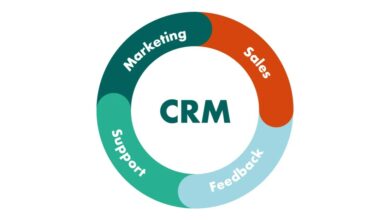
Your B2B website bridges the gap between marketing and sales teams. It’s where leads are nurtured, qualified, and passed on. Tools like lead capture forms, gated content, and CRM integrations ensure seamless handoffs. As Salesforce reports, companies with strong sales and marketing alignment see 36% higher customer retention and 38% higher sales win rates.
“Your website is not just a brochure—it’s your 24/7 sales rep.” — Neil Patel, Digital Marketing Expert
2. Key Elements of a High-Converting B2B Website
A successful B2B website goes beyond aesthetics. It’s engineered for performance, clarity, and conversion. Let’s break down the essential components that make a B2B website truly effective.
Clear Value Proposition Above the Fold
The first thing visitors see should answer: “What do you do, and why should I care?” A strong value proposition is concise, benefit-driven, and tailored to your ideal customer profile. For example, instead of saying “We provide cloud solutions,” say “We help mid-sized manufacturers reduce IT costs by 40% with secure, scalable cloud infrastructure.”
- Use action-oriented language.
- Highlight measurable outcomes.
- Speak directly to pain points.
Targeted Landing Pages for Specific Personas
One-size-fits-all doesn’t work in B2B. Different decision-makers—CFOs, CTOs, operations managers—have different priorities. Create dedicated landing pages for each persona. For instance, a CFO-focused page might emphasize ROI and cost savings, while a CTO page highlights integration capabilities and security.
According to Optimizely, companies using personalized landing pages see up to 5x higher conversion rates.
Robust Content Hub with Educational Resources
B2B buyers are researchers. They consume an average of 13 pieces of content before making a decision, per Gartner. Your B2B website should host a content library including whitepapers, webinars, industry reports, and how-to guides. This positions your brand as a thought leader and nurtures leads over time.
- Organize content by buyer journey stage (awareness, consideration, decision).
- Use gated content to capture lead information.
- Optimize content for SEO with relevant keywords.
3. Design Principles That Enhance User Experience on a B2B Website
While B2B websites may not need the flashy animations of B2C sites, they must be intuitive, fast, and professional. User experience (UX) directly impacts conversion rates and customer perception.
Mobile Responsiveness and Cross-Device Compatibility
Even in B2B, mobile usage is rising. Executives check emails, review proposals, and research vendors on their phones. Google’s mobile-first indexing means your B2B website must perform flawlessly on all devices. Use responsive design frameworks and test across multiple screen sizes.
Tools like Google’s Mobile-Friendly Test can help identify issues.
Intuitive Navigation and Information Architecture
A cluttered menu confuses users. Structure your B2B website with a logical hierarchy: Home > Solutions > Industries > Resources > Contact. Use sticky headers, breadcrumbs, and a search bar to improve findability. According to Nielsen Norman Group, users form opinions about a site’s usability within 50 milliseconds.
- Limit top-level navigation items to 5–7.
- Use descriptive labels (e.g., “Enterprise Solutions” vs. “Products”).
- Include a sitemap for SEO and user access.
Speed Optimization and Technical Performance
Page load speed is critical. A 1-second delay can reduce conversions by 7%. Optimize images, leverage browser caching, and minimize JavaScript. Use tools like Google PageSpeed Insights to audit performance.
“Speed isn’t just a feature—it’s a competitive advantage.” — Steve Souders, Web Performance Pioneer
4. SEO Best Practices for a High-Ranking B2B Website
Search engine optimization (SEO) ensures your B2B website gets discovered by the right audience. Unlike B2C, B2B SEO targets long-tail, intent-rich keywords with lower search volume but higher conversion potential.
Keyword Research Focused on Buyer Intent
Use tools like Ahrefs or Moz to identify keywords such as “best CRM for small manufacturing businesses” or “how to reduce supply chain costs.” These reflect active research and buying intent.
- Group keywords by buyer journey stage.
- Target question-based queries (e.g., “What is ERP software?”).
- Monitor competitor keyword strategies.
On-Page SEO: Titles, Meta Descriptions, and Headers
Each page on your B2B website should have a unique, keyword-rich title tag and meta description. Use H1 for the main title, H2 for section headers, and H3 for subsections. This helps search engines understand your content structure.
Example:
Title: “B2B Website Solutions for Industrial Suppliers | Boost ROI”
Meta: “Discover how a high-performing B2B website can streamline sales and grow your industrial supply business. Free consultation available.”
Technical SEO: Sitemaps, Schema, and Indexing
Ensure your B2B website has a clean URL structure, XML sitemap, and robots.txt file. Implement schema markup (e.g., Organization, Product, FAQ) to enhance rich snippets in search results. Use Google Search Console to monitor indexing status and fix crawl errors.
5. Lead Generation and Conversion Optimization on a B2B Website
A beautiful B2B website means nothing if it doesn’t generate leads. Conversion rate optimization (CRO) is about removing friction and guiding users toward the next step.
Strategic Call-to-Action (CTA) Placement
CTAs should be visible, action-oriented, and contextually relevant. Use contrasting colors and place them above the fold, at the end of blog posts, and in slide-in sidebars. Examples: “Request a Demo,” “Download the Guide,” “Speak to an Expert.”
- A/B test CTA copy and design.
- Use urgency: “Limited spots available.”
- Personalize CTAs based on user behavior.
Lead Capture Forms and Gated Content
Offer high-value content in exchange for contact information. Keep forms short—ask only for essential fields (name, email, company). Use progressive profiling to gather more data over time. According to Marketo, shorter forms can increase conversion rates by up to 160%.
Live Chat and Chatbot Integration
Live chat can increase lead capture by 20%. Use AI-powered chatbots to answer FAQs, qualify leads, and route inquiries to the right team. Tools like Intercom or Drift integrate seamlessly with B2B websites.
“Chatbots don’t replace humans—they make them more efficient.” — David Cancel, CEO of Drift
6. Integrating CRM and Marketing Automation with Your B2B Website
A standalone B2B website is like a phone without a network. Integration with CRM and marketing tools turns visitors into nurtured leads and customers.
Synchronizing Website Data with CRM Systems
Tools like Salesforce, HubSpot, or Zoho CRM can sync form submissions, page visits, and engagement scores. This gives sales teams real-time insights into lead behavior.
- Tag leads based on content downloads.
- Set up automated alerts for high-intent actions (e.g., pricing page visit).
- Track lead source for ROI analysis.
Automated Email Nurturing Campaigns
Not all leads are ready to buy. Use marketing automation to send targeted email sequences based on user behavior. For example, someone who downloads a whitepaper on “Supply Chain Optimization” can be enrolled in a 5-part email series on logistics efficiency.
According to Constant Contact, automated emails generate 320% more revenue than non-automated ones.
Behavioral Tracking and Personalization
Use tools like Hotjar or Crazy Egg to track heatmaps, scroll depth, and user recordings. This data reveals what content resonates and where users drop off. Then, personalize the experience—show relevant case studies or product recommendations based on past behavior.
7. Measuring Success: Analytics and KPIs for Your B2B Website
You can’t improve what you don’t measure. A high-performing B2B website relies on data-driven decisions. Set up analytics to track the right metrics.
Essential KPIs for B2B Website Performance
Focus on metrics that reflect business outcomes, not just traffic. Key KPIs include:
- Lead conversion rate (visitors to leads)
- Cost per lead (CPL)
- Customer acquisition cost (CAC)
- Time on page and bounce rate
- Marketing-qualified leads (MQLs) and sales-qualified leads (SQLs)
Use Google Analytics 4 to set up conversion tracking and attribution models.
Using A/B Testing to Optimize Every Element
Never assume—always test. Run A/B tests on headlines, CTAs, images, and layouts. Even small changes can have big impacts. For example, changing a CTA from “Learn More” to “Get Your Free Assessment” increased conversions by 90% in one VWO case study.
Regular Audits and Continuous Improvement
Conduct quarterly website audits to assess design, content, SEO, and performance. Use checklists to evaluate mobile usability, broken links, and content freshness. A B2B website is not a one-time project—it’s a living asset that evolves with your business.
“The best websites are never finished—they’re constantly optimized.” — Rand Fishkin, Founder of Moz
What makes a B2B website different from a B2C website?
B2B websites focus on logic, ROI, and long sales cycles, while B2C sites emphasize emotion and instant gratification. B2B sites often include detailed product specs, case studies, and multi-user login features, whereas B2C sites prioritize fast checkout and visual appeal.
How important is SEO for a B2B website?
Extremely important. Over 70% of B2B buyers start their journey with a search engine. A well-optimized B2B website ranks for industry-specific keywords, builds authority, and generates organic leads without paid ads.
What’s the ideal conversion rate for a B2B website?
The average B2B website conversion rate is 2–5%. However, high-performing sites can achieve 10% or more through targeted messaging, strong CTAs, and lead nurturing.
Should I include pricing on my B2B website?
It depends. If your pricing is straightforward, transparency builds trust. For complex or customized solutions, use a “Request a Quote” CTA instead. Some companies use tiered pricing pages to guide users toward consultation.
How often should I update my B2B website?
Content should be reviewed quarterly, and major updates every 18–24 months. Regularly add new case studies, blog posts, and product updates to keep the site fresh and SEO-friendly.
A powerful B2B website is more than a digital brochure—it’s a strategic growth engine. From building trust and generating leads to integrating with CRM and measuring performance, every element must be intentional and data-driven. By focusing on user experience, SEO, and conversion optimization, your B2B website can become your most effective sales and marketing tool. The digital landscape is competitive, but with the right strategy, your website can dominate your niche and drive sustainable growth.
Further Reading: