Ever wondered how the backbone of global commerce operates? B2B companies are the silent engines powering industries, from manufacturing to tech. In this deep dive, we’ll unpack what makes them tick, thrive, and transform the business landscape.






What Are B2B Companies and Why They Dominate Global Trade

B2B companies—short for business-to-business—are organizations that sell products or services to other businesses rather than individual consumers. Unlike B2C (business-to-consumer) models, B2B transactions often involve larger contracts, longer sales cycles, and deeper relationship-building. These companies form the foundation of supply chains, enabling everything from raw material sourcing to software integration.
The Core Definition of B2B Companies
At its essence, a B2B company provides goods or services that help another business operate, grow, or innovate. This could be a cloud computing provider like Amazon Web Services serving enterprises, or a logistics firm transporting components between factories. The key differentiator is the target customer: not the end-user, but another business entity.
- B2B companies sell to other businesses, not individual consumers.
- Transactions are typically high-value and recurring.
- Sales cycles are longer due to complex decision-making processes.
How B2B Differs from B2C Models
While B2C companies focus on emotional appeal and instant gratification, B2B companies prioritize logic, ROI, and long-term value. A consumer might buy a smartphone on impulse, but a company purchasing enterprise software will evaluate cost, scalability, security, and integration capabilities. According to McKinsey & Company, B2B buyers now expect B2C-like digital experiences, blurring the lines between the two models.
“B2B buyers are 53% through their decision-making process before even engaging with a sales rep.” – McKinsey
Historical Evolution of B2B Commerce
B2B commerce isn’t new—it dates back to the Industrial Revolution when manufacturers sourced materials from suppliers. However, the digital era has revolutionized how B2B companies operate. The rise of e-procurement platforms, AI-driven analytics, and SaaS (Software as a Service) has transformed traditional supplier relationships into dynamic, data-rich ecosystems. Today, platforms like LinkedIn and Salesforce enable B2B companies to network, sell, and service clients globally.
Top 7 Industries Dominated by B2B Companies
B2B companies span nearly every sector, but some industries are particularly reliant on business-to-business transactions. These sectors thrive on specialization, scale, and interdependence, making B2B relationships essential for innovation and efficiency.
Manufacturing and Industrial Supply
This sector includes companies that produce machinery, components, and raw materials for other manufacturers. For example, a steel producer supplies automotive companies, while a semiconductor manufacturer feeds into electronics firms. These B2B companies operate on razor-thin margins but achieve profitability through volume and long-term contracts.
- Key players: Siemens, General Electric, Bosch
- Revenue model: Bulk orders, supply chain integration
- Challenges: Supply chain disruptions, geopolitical risks
Information Technology and SaaS
IT and SaaS (Software as a Service) are among the fastest-growing B2B sectors. Companies like Microsoft, Oracle, and Zoom provide cloud-based tools that enable remote work, data analytics, and cybersecurity. The subscription-based model ensures recurring revenue, making these B2B companies highly attractive to investors.
According to Gartner, global spending on public cloud services will exceed $600 billion by 2024, driven largely by B2B demand. This growth is fueled by digital transformation initiatives across industries.
Professional Services and Consulting
Firms like Deloitte, PwC, and McKinsey operate purely on a B2B model, offering expertise in finance, strategy, and operations. These companies don’t sell physical products but instead provide intellectual capital. Their success hinges on trust, reputation, and measurable outcomes.
“In 2023, the global management consulting market was valued at over $300 billion.” – Statista
Logistics and Supply Chain Solutions
B2B companies in logistics—such as DHL, FedEx, and Maersk—ensure goods move efficiently across borders. They offer warehousing, freight forwarding, and inventory management services tailored to business clients. With the rise of e-commerce, even B2C giants rely heavily on B2B logistics partners.
- Key services: Last-mile delivery, customs clearance, real-time tracking
- Trends: AI-powered route optimization, blockchain for transparency
- Impact: Enables just-in-time manufacturing and global trade
Healthcare and Medical Equipment
B2B companies in healthcare supply hospitals, clinics, and research labs with medical devices, pharmaceuticals, and diagnostic tools. Firms like Medtronic and Johnson & Johnson operate extensive B2B networks. Regulatory compliance and R&D investment are critical in this high-stakes sector.
How B2B Companies Build Long-Term Customer Relationships
Unlike B2C, where loyalty can be fleeting, B2B companies thrive on long-term partnerships. These relationships are built on trust, performance, and mutual growth. A single client can represent millions in annual revenue, making retention a top priority.
The Role of Account Management in B2B
Dedicated account managers act as the primary point of contact between B2B companies and their clients. They understand the client’s business goals, anticipate needs, and coordinate internal teams to deliver value. Effective account management reduces churn and increases lifetime customer value.
- Responsibilities: Relationship nurturing, contract renewals, upselling
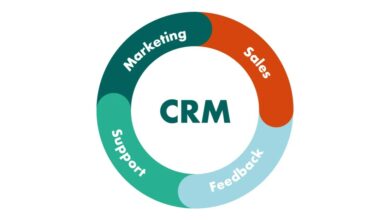
- Tools: CRM platforms like HubSpot and Salesforce
- Best practices: Regular check-ins, personalized communication
Customer Success as a Strategic Function
Customer success goes beyond support—it’s about ensuring clients achieve their desired outcomes using your product or service. B2B companies like Adobe and Slack have entire departments focused on onboarding, training, and usage optimization. This proactive approach reduces attrition and drives expansion revenue.
A study by TSIA found that companies with mature customer success programs see 15-25% higher retention rates. This proves that investing in customer success isn’t just a cost—it’s a growth engine.
Contract Negotiation and Value-Based Pricing
B2B sales often involve complex negotiations. Unlike fixed-price B2C models, B2B companies use value-based pricing, where the cost reflects the client’s perceived ROI. For example, a cybersecurity firm might charge based on the number of endpoints protected and the risk mitigated.
“Pricing should reflect the value delivered, not just the cost incurred.” – Harvard Business Review
Digital Transformation in B2B Companies: Trends to Watch
The digital revolution has reshaped how B2B companies operate, sell, and service clients. From AI to e-commerce platforms, technology is no longer optional—it’s a competitive necessity.
AI and Automation in B2B Operations
Artificial intelligence is streamlining everything from lead scoring to invoice processing. B2B companies use AI chatbots for customer support, predictive analytics for demand forecasting, and machine learning for fraud detection. According to IBM, AI can reduce operational costs by up to 30% in B2B environments.
- Applications: Sales forecasting, chatbots, document processing
- Benefits: Efficiency, accuracy, scalability
- Challenges: Data privacy, integration complexity
The Rise of B2B E-Commerce Platforms
Just as consumers shop online, businesses now expect seamless digital purchasing experiences. B2B e-commerce platforms like Alibaba, Grainger, and Amazon Business allow companies to browse catalogs, compare prices, and place orders 24/7. These platforms reduce friction and accelerate procurement.
Statista reports that global B2B e-commerce sales will reach $20.9 trillion by 2027, surpassing B2C e-commerce in volume. This shift is driven by younger, tech-savvy procurement professionals who demand digital convenience.
Data Analytics and Personalization in B2B Marketing
B2B companies are leveraging data to deliver hyper-personalized marketing campaigns. By analyzing customer behavior, purchase history, and engagement patterns, they can tailor content, offers, and messaging. For example, a SaaS company might send targeted emails based on a client’s feature usage.
“Personalization can increase B2B conversion rates by up to 40%.” – Salesforce Research
Challenges Facing Modern B2B Companies
Despite their critical role in the economy, B2B companies face numerous challenges. From economic volatility to cybersecurity threats, navigating these obstacles requires agility, foresight, and resilience.
Economic Uncertainty and Supply Chain Disruptions
Global events like pandemics, wars, and inflation directly impact B2B operations. A single disruption in the semiconductor supply chain can halt production for automakers and electronics firms. B2B companies must build resilient supply networks, often through dual sourcing and inventory buffering.
- Recent example: The 2021 Suez Canal blockage disrupted $9 billion in daily trade
- Solutions: Diversified suppliers, real-time monitoring
- Impact: Increased focus on supply chain visibility
Cybersecurity Threats in B2B Transactions
As B2B companies digitize, they become prime targets for cyberattacks. Phishing, ransomware, and data breaches can compromise sensitive contracts and client data. A 2023 report by Cisco found that 62% of cyberattacks target B2B organizations.
To combat this, B2B companies are investing in zero-trust architectures, multi-factor authentication, and employee training. Compliance with standards like ISO 27001 and GDPR is no longer optional—it’s a prerequisite for doing business.
Talent Acquisition and Retention in B2B Sectors
Attracting skilled professionals—especially in tech, engineering, and sales—is a persistent challenge. B2B companies often compete with B2C giants for top talent. Offering competitive salaries, flexible work models, and career development opportunities is crucial.
“Companies with strong employer branding see 50% more qualified applicants.” – LinkedIn Talent Solutions
Innovation and R&D: How B2B Companies Stay Ahead
Innovation is the lifeblood of B2B competitiveness. Whether it’s developing new materials, improving software algorithms, or optimizing logistics networks, R&D drives long-term success.
Investing in Research and Development
Leading B2B companies allocate significant budgets to R&D. For example, pharmaceutical firms spend up to 20% of revenue on developing new drugs. Similarly, tech companies like Intel and Samsung invest billions annually in chip design and fabrication.
- Key areas: Product improvement, process optimization, sustainability
- Funding sources: Internal budgets, government grants, venture capital
- Outcomes: Patents, competitive advantage, market leadership
Collaborative Innovation with Clients
Many B2B companies co-develop solutions with their clients. This collaborative approach ensures that products meet real-world needs. For instance, Boeing works closely with airlines to design fuel-efficient aircraft. This not only strengthens relationships but also reduces time-to-market.
A study by Boston Consulting Group found that companies engaging in open innovation grow 2.5x faster than those that don’t. This highlights the strategic value of client collaboration.
Sustainability as a Driver of B2B Innovation
Sustainability is no longer a buzzword—it’s a business imperative. B2B companies are innovating to reduce carbon footprints, minimize waste, and meet ESG (Environmental, Social, and Governance) goals. For example, Siemens offers energy-efficient industrial automation systems, while Patagonia’s B2B arm supplies sustainable materials to other brands.
“73% of B2B buyers prefer suppliers with strong sustainability practices.” – NielsenIQ
The Future of B2B Companies: Predictions and Opportunities
The future of B2B companies is shaped by technology, globalization, and shifting buyer expectations. Those that adapt will not only survive but thrive in the next decade.
Hyper-Personalization Through AI and Big Data
AI will enable B2B companies to deliver unprecedented levels of personalization. Imagine a procurement platform that predicts a client’s needs based on past orders, market trends, and even weather patterns. This level of insight will redefine customer experience.
- Technologies: Machine learning, natural language processing
- Applications: Dynamic pricing, predictive support, smart recommendations
- Impact: Increased loyalty and reduced churn
Expansion into Emerging Markets
While mature markets remain important, B2B companies are increasingly targeting emerging economies. Countries like India, Vietnam, and Nigeria offer growing industrial bases and digital infrastructure. Localizing products, building regional partnerships, and understanding cultural nuances will be key to success.
According to the World Bank, emerging markets will account for 60% of global GDP growth by 2030. This presents a massive opportunity for B2B expansion.
The Integration of IoT and Smart Ecosystems
The Internet of Things (IoT) is connecting machines, sensors, and systems in real time. B2B companies are leveraging IoT to offer predictive maintenance, remote monitoring, and usage-based billing. For example, Rolls-Royce’s “Power by the Hour” model charges airlines based on engine performance data.
“By 2025, over 75 billion devices will be connected globally.” – IDC
What defines a B2B company?
A B2B company sells products or services to other businesses rather than individual consumers. Examples include software providers, industrial suppliers, and consulting firms. The focus is on solving business problems, delivering ROI, and building long-term partnerships.
How do B2B sales cycles differ from B2C?
B2B sales cycles are typically longer and more complex, involving multiple decision-makers, detailed proposals, and contract negotiations. In contrast, B2C sales are often quick and emotionally driven. B2B buyers prioritize logic, cost-efficiency, and long-term value.
What are the biggest trends in B2B marketing?
Key trends include account-based marketing (ABM), content personalization, AI-driven analytics, and video marketing. B2B companies are also investing in thought leadership and digital experiences that mirror B2C convenience.
Why is customer success important in B2B?
Customer success ensures clients achieve their goals using your product or service. In B2B, where contracts are high-value and long-term, retaining customers is more cost-effective than acquiring new ones. A strong customer success strategy drives renewals, upsells, and referrals.
How can B2B companies improve digital transformation?
B2B companies should invest in integrated platforms (CRM, ERP), adopt AI and automation, prioritize data security, and train employees on digital tools. Partnering with tech providers and monitoring industry benchmarks can accelerate transformation.
The world of B2B companies is dynamic, complex, and essential to global economic function. From manufacturing and IT to consulting and logistics, these organizations enable innovation, efficiency, and growth across industries. As digital transformation accelerates, customer expectations evolve, and sustainability becomes a priority, B2B companies must adapt with agility and foresight. By embracing AI, personalization, and collaborative innovation, they can not only survive but lead in the next era of commerce. The future belongs to those who build value, trust, and resilience—one business partnership at a time.
Further Reading: